What Should Buyers Include in a 60 Frame Molding RFQ?
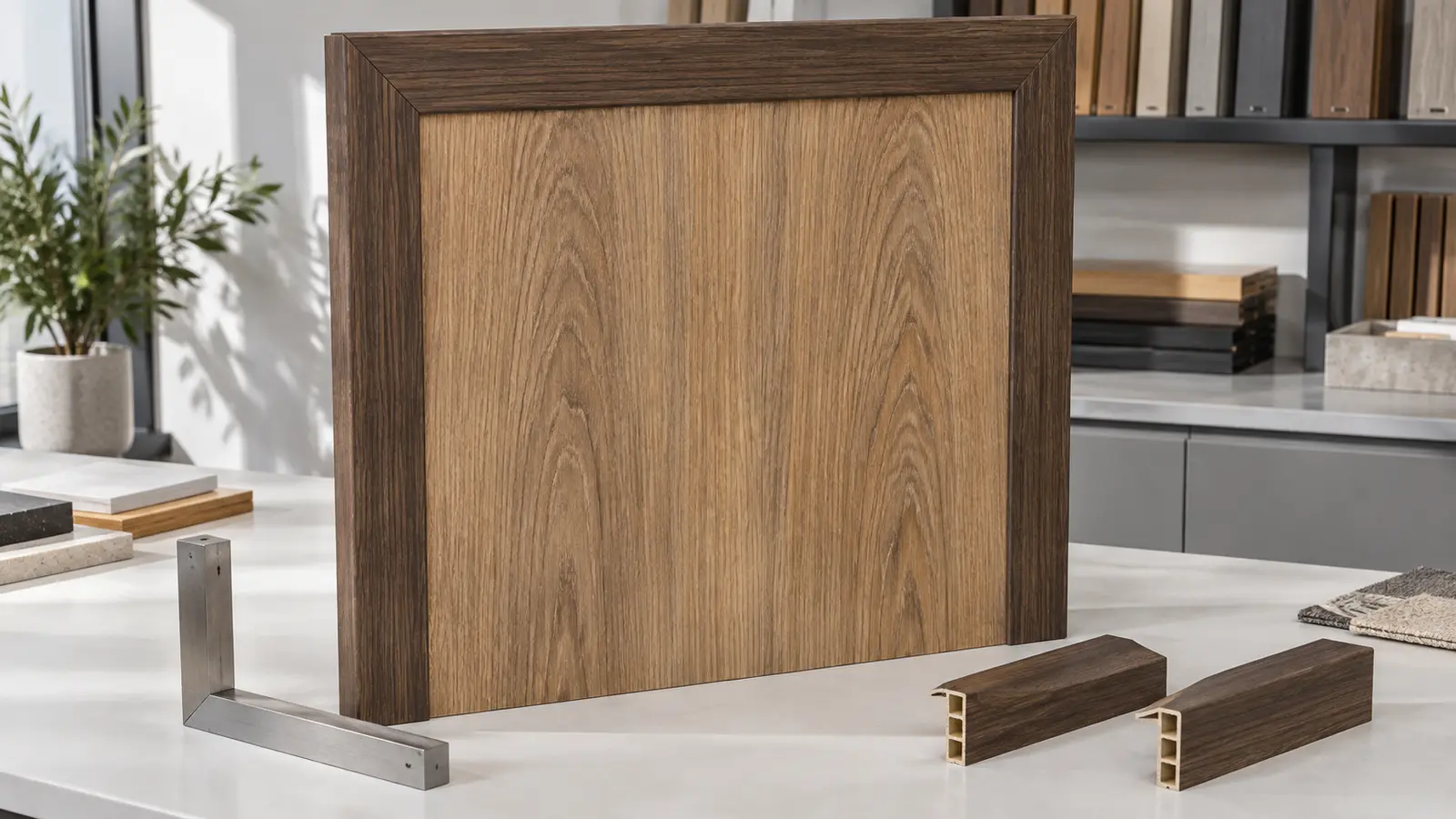
A 60 frame molding RFQ should define the molding as part of a complete wall-panel border or decorative frame, not as an isolated trim. Buyers should submit the target wall panel, profile drawing, frame layout, outside and inside dimensions, corner method, joint locations, finish reference, substrate, fixing responsibility, cut-length plan, quantity, packing and approval evidence. A visually similar molding may still fail if its groove, coverage, return, corner geometry or finish does not match the panel and installed condition. The safest purchasing route is to approve a profile-and-panel combination, then verify a sample corner or small frame before bulk production. The supplier’s quotation should identify all assumptions and deviations rather than responding only with a price per metre.
Why Should Buyers Specify a Frame System Instead of a Loose Molding?
Frame molding establishes a visible boundary. It may finish a wall-panel field, create a decorative rectangle, surround an artwork zone or provide a transition between materials. Its success depends on what it touches and how it turns a corner. Ordering only a length and colour ignores those interfaces.
A complete specification starts with an elevation showing where the molding runs. The drawing should identify the associated panel, the frame’s finished dimensions, inside and outside corners, intersections, open ends and any break around switches, doors or other features. The product section should then be checked against this layout. The buyer and supplier need the same interpretation of which face remains visible and which feature engages, overlaps or finishes the wall panel.
What Must Match Between the Molding and Wall Panel?
Compatibility is not established by colour alone. The parties should compare panel thickness or edge condition, the molding’s relevant groove or coverage, the installed build-up, substrate and fixing route. If the molding is intended to coordinate with panels from the same decorative series, the RFQ should name that series and include the panel reference. If the panel comes from another source, a representative piece or controlled drawing is important.
Buyers can begin by reviewing the wall installation fittings category, which places molding within the broader finishing system. A category view supports product discovery, but it does not prove that every fitting fits every panel. Compatibility should be confirmed for the exact quoted combination.
Which Interfaces Should the RFQ Freeze?
| Interface | Buyer must define | Supplier must confirm | Risk if missing | Evidence |
|---|---|---|---|---|
| Panel relationship | Panel type and edge condition | Compatible engagement or coverage | Gap, loose fit or exposed edge | Section drawing and sample |
| Profile geometry | Required visible face and frame effect | Offered cross-section | Wrong proportion or installation depth | Controlled drawing |
| Frame layout | Finished dimensions and joint locations | Length and cut basis | Incorrect takeoff | Marked elevation |
| Corners | Miter, joint or approved detail | Fabrication boundary | Open or misaligned corners | Corner sample |
| Finish | Approved colour and grain | Finish code and lot plan | Mismatch with panels | Signed sample |
| Fixing | Substrate and installation method | Supplied component scope | Unclear site responsibility | Method/interface detail |
| Acceptance | Inspection method and tolerance basis | Record scope | Subjective delivery dispute | Approved sample and report |
How Should Cross-Section and Coverage Be Confirmed?
Website photographs communicate style but cannot serve as dimensional control. The supplier drawing should show the section, key dimensions, visible surfaces and the features relevant to installation. The buyer should mark the orientation on the wall detail. Where the molding overlaps a panel edge, the drawing should make that coverage explicit. Where it sits next to a panel, the required reveal or joint should be defined.
The term “60” should be treated as a product identifier until the current drawing confirms what it represents. Procurement teams should avoid converting the name into an assumed nominal width, depth or coverage. This precaution is especially important when comparing offers from different manufacturers, because similar series names do not guarantee interchangeable geometry.
Why Do Corners, Joints and End Conditions Need Their Own Review?
A straight sample does not show how the finished frame will look. A rectangular frame introduces four corners; a large wall may also require lengthwise joints. Small angular or length errors accumulate and can leave a visible corner open or make the final piece difficult to install. The RFQ should state whether pieces are supplied as stock lengths, factory-cut sets or partially prepared components.
If miters are required, the parties should define who cuts them, how dimensions are referenced, and whether the finished frame dimension is measured inside, outside or to a centerline. Where the installer cuts on site, the supplier should not be assumed responsible for final joint appearance. Where factory-cut kits are requested, the buyer must provide stable, approved dimensions and a piece-marking convention. Special corners or end caps should be listed as separate items rather than assumed.
A sample corner is often more informative than several loose strips. It can reveal whether visible faces align, whether the grain direction is acceptable, and whether the chosen fixing method leaves the intended appearance. Any approved sample should be dated and linked to the drawing and purchase-order revision.
How Should Finish and Grain Be Coordinated?
The molding’s finish must be evaluated next to the selected wall panel, in the intended orientation and under representative lighting. “Same colour” can mean an identical finish code, a coordinated tone, or merely a broadly similar wood effect. The buyer should state which interpretation applies. If exact visual continuity is critical, a combined sample board should include both materials.
Grain direction matters at frame corners and around rectangular layouts. The buyer should decide whether each side follows its own length, whether a particular face is the visual reference, and whether minor pattern differences are acceptable. The supplier should confirm how pieces are packed so the installer can preserve the approved sequence. Where more than one production phase is planned, batch coordination expectations should be stated before ordering.
What Should Buyers Confirm About Substrate and Fixing?
The same molding can behave differently on a flat panel system, a prepared wall or an uneven site substrate. The RFQ should identify the installation build-up and whether fixing materials are included. Adhesive selection, mechanical fixing, surface preparation and cure conditions may depend on the project’s substrates and local installation specification; they should not be inferred from the molding name.
The scope boundary should distinguish material supply from installation design. A supplier can confirm the offered molding and disclosed accessories, but the responsible project party must approve the substrate, fixing method and site execution. If a mock-up is required, its approval should include both appearance and the proposed installation sequence.
The 60 frame molding product page is a specific evaluation point for a bamboo-wood-fiber composite decorative profile with a wood-grain surface, intended for wall-panel borders and frame effects in interior spaces. The page defines the product family; the order still requires the exact section, finish, panel pairing and installation boundary to be confirmed.
How Should Quantity and Cut Lengths Be Quoted?
A linear-metre quantity is only useful when the supply form is known. Stock lengths may create different waste than factory-cut frame sets. The buyer should provide each frame’s finished dimensions, number of repeated units, allowed joint locations and whether spare material is required. The supplier should state its quotation length basis and how many pieces or packages the total represents.
For factory-cut material, dimension revision control becomes essential. Production should not begin from an informal screenshot if a controlled elevation exists. Each set may need a room, wall or frame identifier. For stock-length supply, the installer needs a cutting plan and responsibility for waste. Comparing quotations requires normalizing these boundaries; a lower unit price can be misleading if usable yield or included cutting differs.
What Should Sample Approval and Inspection Cover?
Sample approval should cover the section, visible face, finish, panel compatibility and corner concept. A project mock-up can additionally show joint alignment, lighting response and the transition to adjacent materials. The approval record should identify the sample, date, drawing revision and agreed deviations.
Pre-shipment or arrival inspection may include quantity, labels, obvious transit damage, sampled cross-section identity, finish reference and straightness or surface condition according to the agreed criteria. Packing should protect long profiles from bending, abrasion and mixed identification. If the project requires a special inspection record, the RFQ should state the format and sampling expectation before quotation.
What Common Mistakes Make Frame Molding RFQs Unreliable?
Specifying only a colour and total length
This omits the panel interface, section, frame geometry and corner method, so offers may not be comparable.
Assuming all matching wood grains are identical
Screen images and names do not establish an approved match. Confirm the molding beside the panel with a physical reference.
Leaving miter responsibility unstated
Factory and installer may each assume the other will cut and fit corners, creating cost and schedule changes.
Ignoring long-profile packing
A correct product can arrive scratched, mixed or deformed if protection and labeling are not defined.
Approving a straight piece only
The most visible risks often occur at corners, joints and ends. Include at least one representative detail in approval.
What Evidence Should the Supplier Return?
A useful quotation package contains the offered profile drawing, finish reference, supply length, quantity basis, included accessories, packing method and deviations. If compatibility is claimed with a named panel, the response should identify the combination reviewed. Alternatives should be clearly separated from the requested configuration rather than presented as silent substitutions.
The buyer can request a sample, corner assembly or small frame before a large order. Sample success confirms only the evaluated configuration; it does not authorize changes to section, finish or panel pairing. Bulk production should follow an approval record tied to the final purchase documents.
What Should a 60 Frame Molding RFQ Include?
- Project and room application.
- Wall-panel product, thickness and edge condition.
- Controlled molding profile or requested supplier drawing.
- Frame elevations and finished inside/outside dimensions.
- Corner, joint, termination and intersection details.
- Stock lengths or factory-cut schedule.
- Finish code, grain direction and combined sample requirement.
- Substrate and proposed fixing boundary.
- Included accessories and excluded installation materials.
- Quantity, spare allowance and area or room identification.
- Sample-corner or mock-up approval.
- Packing, labeling, destination and delivery phases.
- Inspection criteria, documents and deviation process.
Ask the supplier to mark each requirement as Confirmed, Deviation, Alternative, or Buyer Input Required. Send the panel reference, frame elevation, finish, quantities and destination through the Dongfanglong quotation request page so the offer can be based on the actual wall system.
Frequently Asked Questions
Can buyers order 60 frame molding without naming the wall panel?
They can request preliminary information, but final compatibility should be confirmed against the exact panel edge, build-up and installation detail.
Does the product name prove the molding is 60 mm wide?
No. Buyers should use the current controlled cross-section drawing rather than deriving a dimension from the series name.
Should corners be factory cut or site cut?
Either route may be appropriate. The RFQ should assign cutting responsibility, dimensional references, labeling and approval evidence.
What sample gives the best approval evidence?
A molding-and-panel assembly with a representative corner is usually more informative than an isolated straight strip because it tests geometry, finish coordination and joint appearance together.