Selecting 60 WPC Ceiling Tube: What Project Conditions Should Buyers Confirm?
A 60 wpc ceiling tube should be selected only after the buyer confirms where it will be used, how it connects with the ceiling or partition system, what visual spacing is required, which keel or support structure will carry it, what color and surface finish are expected, and how samples, drawings, packing and installation fittings will be approved. For project procurement, the number “60” is not enough. The buyer must translate the interior design intent into a measurable profile requirement so suppliers can quote the same ceiling tube configuration rather than similar-looking WPC profiles with different installation assumptions.
Start With the Ceiling or Partition Application
The first question is whether the product will be used as a ceiling profile, a partition element, a decorative grille, or part of a coordinated interior profile system. These applications may look similar in a catalogue, but they place different demands on layout, mounting, spacing, visibility, cutting and accessory matching.
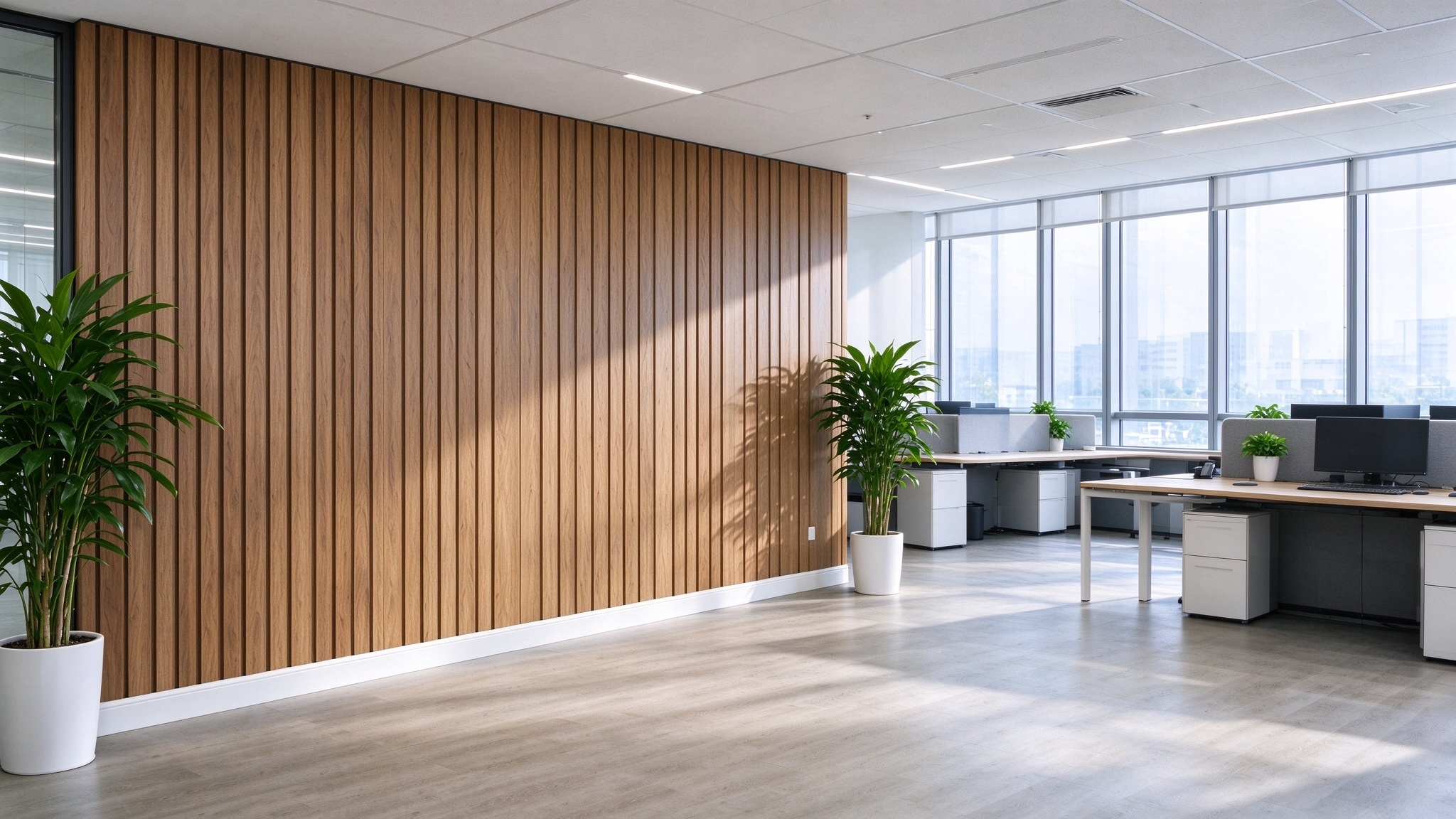
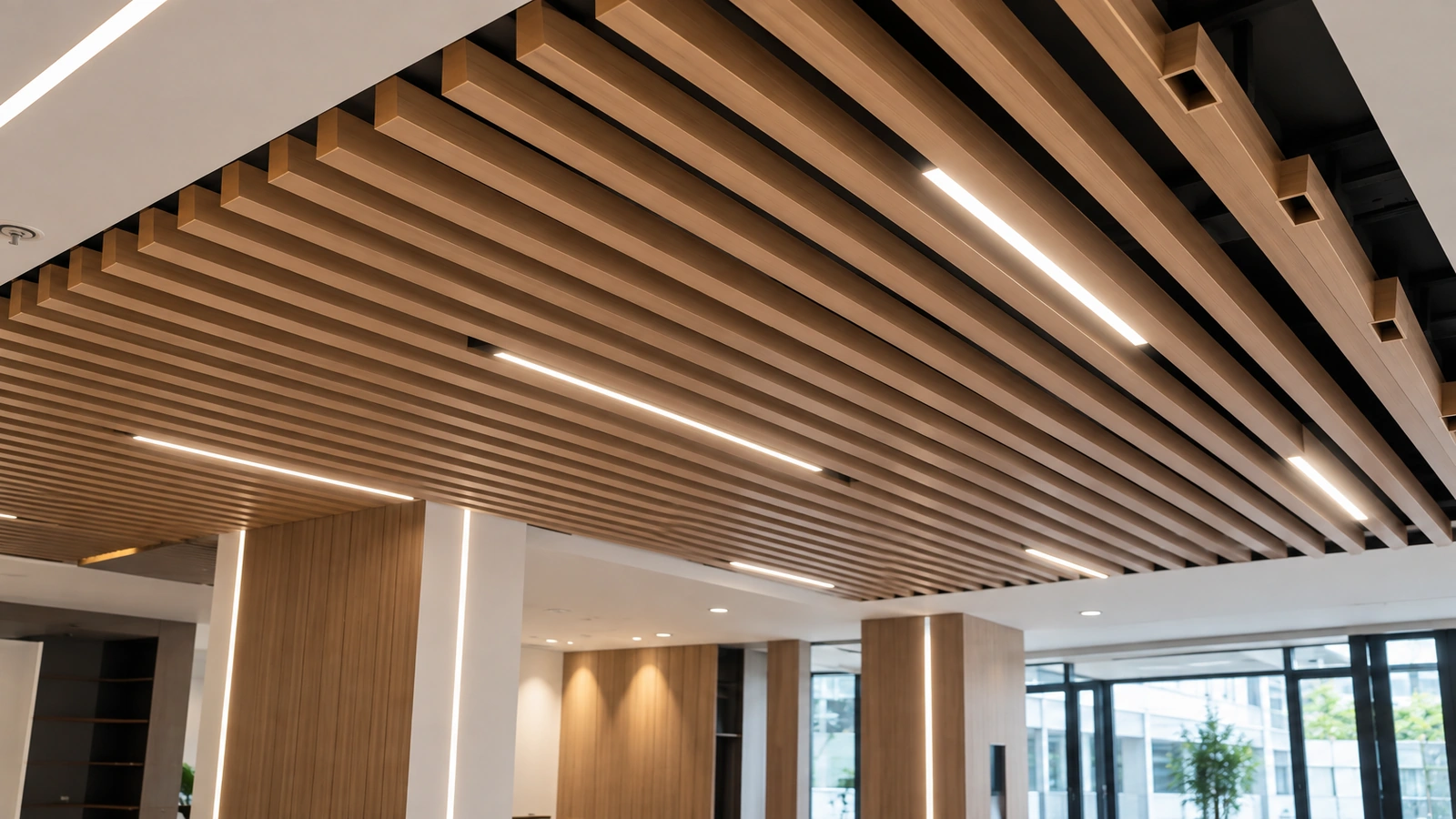
For a ceiling project, the buyer usually needs to confirm the ceiling grid, suspension or keel arrangement, tube direction, visible spacing and access to lighting, air-conditioning, sprinklers or inspection panels. For a partition or screen application, the same profile may need different fixing details, edge treatment and alignment. For a commercial fit-out, the designer may focus on continuity between wall, ceiling and corridor areas, which means the profile cannot be evaluated in isolation.
Dongfanglong lists WPC ceiling and partition profiles as part of its decorative-material product system, alongside wall panels, grating/fluted panels and installation fittings. That makes the WPC Ceiling & Partition Profiles category the right starting point for buyers who need to understand the broader product family before confirming the 60 WPC Ceiling Tube.
The “60” Size Must Be Connected to the Design Drawing
A size term such as “60” should not be treated as a complete specification. It may refer to a profile dimension used by the supplier’s product naming system, but the buyer still needs a dimensioned drawing or product datasheet to confirm the actual width, depth, wall structure, groove, installation interface and tolerance needed for the project.
This is especially important when the project includes several profile sizes. A buyer may compare 45, 60, 80, 90 or other WPC ceiling tubes, or may compare a ceiling tube with a square tube or hollow profile. These options should not be chosen only by visual preference. Profile size affects spacing rhythm, shadow depth, perceived ceiling height, weight, cutting method, fixing point, packaging length and the number of pieces needed for a ceiling area.
The buyer should provide a reflected ceiling plan, elevation, section detail or at least a project sketch showing tube direction, spacing, ceiling height and edge conditions. The supplier can then confirm whether the 60 WPC Ceiling Tube is the correct profile or whether another size is better matched to the layout.
A practical decision chain is: design spacing → visible profile size → keel/support arrangement → cutting and fixing method → sample approval → quotation scope. If the first design input is missing, the quotation will only be a product-price response, not a project-ready offer.
U-Shaped Profile and Keel Fit Should Be Verified Together
The product record identifies the 60 WPC Ceiling Tube as a medium-size U-shaped ceiling profile that works with a keel for modular ceiling installation and enhances spatial layering. This is useful product-page evidence, but it also creates a specific buyer responsibility: the U-shaped profile and the keel system must be reviewed together.
A U-shaped ceiling profile may rely on a defined mounting method, clip, screw, rail or keel relationship. If the buyer only orders the decorative tube and ignores the support interface, installation teams may need to adapt the fixing method on site. That can lead to visible misalignment, uneven spacing, unstable sections or extra labor during fit-out.
The RFQ should ask the supplier to clarify:
- which keel or support system the profile is intended to work with;
- whether clips, fasteners, rails or other fittings are included;
- how the profile is cut and joined at corners or ends;
- how long pieces are kept aligned across a ceiling run;
- whether installation drawings or typical fixing details are available;
- which items are supplied by the buyer, contractor or installer.
This does not mean every project uses the same installation method. It means the fixing logic must be visible before pricing is compared. A supplier quoting profile-only material is not quoting the same scope as a supplier quoting profile plus matching installation fittings.
Visual Rhythm, Spacing and Color Control Affect Project Acceptance
Ceiling tubes are visible decorative components. A technically installable profile can still fail project acceptance if the visual spacing, color tone, texture or batch consistency does not match the interior design. For hotels, offices, retail spaces and commercial corridors, the ceiling line can be one of the most noticeable design features in the room.
The buyer should confirm the visual requirement before approving production. That includes color, surface texture, gloss level if relevant, wood-grain direction if present, sample board, lighting condition and the relationship between ceiling profiles and adjacent wall panels or mouldings.
Lighting changes the appearance of WPC profiles. A sample checked under warehouse light may look different under warm commercial lighting, daylight near a window or linear LED strips installed between profiles. The RFQ should therefore include the design’s intended color family and require sample confirmation before bulk supply.
Batch consistency also matters. If a project is supplied in phases, buyers should ask whether color and surface matching will be managed by order batch, sample reference or production lot. The current client data does not verify a formal color-control system, so the article should keep this as a procurement confirmation point rather than a claim.
Measure the Installation Environment Before Finalizing the Profile
Interior profiles are affected by the site environment. The buyer should provide ceiling height, room type, substrate, existing structure, humidity exposure if relevant, ventilation or air-conditioning layout, lighting plan and access requirements. A ceiling tube used in a dry retail store may face different installation questions from one used near an entrance, service corridor or high-humidity interior area.
WPC products are often selected for decorative interior systems, but project conditions still need to be checked. If the space requires special fire behavior, moisture resistance, impact resistance, acoustic behavior or cleaning performance, those requirements must be supported by project documents and supplier evidence. Do not assume that a generic WPC ceiling profile automatically meets every local building or project requirement.
The installation environment also affects cutting and waste. Long straight corridors, small rooms with many corners, ceiling transitions and integrated lighting can all change the number of cut pieces and the packing plan. A buyer who sends only total square meters may receive an incomplete quotation because linear profile projects depend on length, spacing and termination details, not area alone.
Coordinate Ceiling Tubes With Wall Panels and Fittings
Many decorative-material projects require coordinated product families. A ceiling tube may be installed near fluted wall panels, skirting boards, cornices, mouldings, partition profiles or edge trims. If these items are purchased separately without design coordination, color mismatch, profile conflict or installation gaps can appear on site.
Dongfanglong’s product system includes wall decorative panels, wood-plastic composite grating panels, WPC ceiling and partition profiles, and wall installation fittings. Buyers should use this category structure to build a coordinated materials list rather than treating the 60 WPC Ceiling Tube as a standalone item.
For example, if a commercial lobby uses ceiling tubes above a fluted wall-panel area, the buyer should confirm the color relationship, edge transition and installation sequence. If a partition uses the same profile language as the ceiling, the supplier should confirm whether the ceiling tube is suitable for that role or whether a different profile is required.
This coordination step protects quotation comparability. A profile-only quote may be cheaper, but it may not include trims, clips, edge pieces or related fittings needed for the project installation.
Evidence Should Prove the Product and the Installation Scope
Supplier evidence should be tied to the buyer’s project conditions. A product photo alone is not enough for a ceiling profile order, because it does not prove installation method, profile dimension, finish matching or packing scope.
| Buyer Checkpoint | Evidence to Request | What to Verify |
|---|---|---|
| Profile identity | Product page, datasheet or dimensioned drawing | Confirm that the quoted item is the 60 WPC Ceiling Tube and not another WPC profile |
| Keel relationship | Installation detail or typical fixing drawing | Check how the U-shaped profile works with the support system |
| Visual finish | Physical sample or sample board | Review color, texture, gloss and compatibility with adjacent panels |
| Project quantity | Ceiling plan, spacing layout and piece-length calculation | Verify that quantity is based on linear layout rather than area only |
| Accessories | Quotation scope and packing list | Separate profile-only supply from profile plus fittings or trims |
| Acceptance | Approved sample and order specification | Define what controls production and receiving inspection |
This evidence pattern is more useful than a generic supplier checklist. It connects the visible ceiling result to the product and installation documents that the buyer can actually approve.
How Should Buyers Review the 60 WPC Ceiling Tube Page?
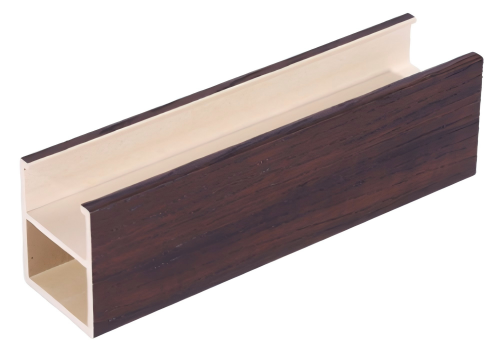
The 60 WPC Ceiling Tube page should be used as the target product reference for this selection decision. Based on the product record, the item is a medium-size U-shaped ceiling profile intended to work with a keel for modular ceiling installation and to support spatial layering in interior projects.
That product-page evidence is useful, but it is not a complete project specification. Buyers still need to confirm project size, drawing, color, surface finish, spacing, installation method, matching fittings, packaging, sample approval and any local project requirement before comparing suppliers.
The page also should not be stretched into claims that are not verified in the current data. If a project requires a specific fire rating, environmental certificate, moisture-performance value, load condition, country approval or warranty, those items must be requested and verified separately.
Quotation Comparison Should Start With Scope Alignment
Two quotations for 60 WPC Ceiling Tube may look similar but include different scopes. One may quote only the decorative profile. Another may include matching keels or fittings. A third may include sample boards, special packing, mixed colors or coordination with wall panels.
The buyer should align the following before comparing price:
- confirmed product name and profile drawing;
- color, finish and sample reference;
- piece length and cutting/waste assumptions;
- ceiling spacing and layout method;
- keel or support-system compatibility;
- included fittings, trims and fasteners;
- packing method and labeling requirements;
- project documentation and deviation list.
Only after these fields are aligned can price comparison be meaningful. A lower quote may simply exclude accessories, installation evidence or finish-control steps that another supplier included.
When Is a 60 WPC Ceiling Tube Not the Right Choice?
The 60 WPC Ceiling Tube may not be the right choice when the design requires a different visual scale, a different profile shape, a square tube, a larger ceiling tube, a smaller grille spacing, a wall-only fluted panel or a project condition that the product cannot support. It may also be unsuitable if the ceiling system requires special performance documentation that the supplier cannot provide for this model.
The decision changes when the installation method changes. A suspended ceiling, fixed decorative screen, partition system or integrated lighting feature can each require different support details. The product should be confirmed against the actual use condition rather than selected because the profile name appears close to the search term.
This boundary keeps the article focused: the purpose is to help buyers select the correct 60 WPC ceiling profile for an interior project, not to claim that one profile solves every ceiling and partition requirement.
Build the Final RFQ Around the Ceiling Profile System
A complete RFQ for 60 WPC Ceiling Tube should include:
- project type: ceiling, partition, decorative grille or coordinated interior system;
- reflected ceiling plan, elevation or layout sketch;
- required profile size, spacing and visual rhythm;
- color, texture and sample reference;
- ceiling height, substrate and site environment;
- keel/support system and fixing method;
- matching fittings, trims, mouldings or panels required;
- piece length, quantity and cutting/waste assumptions;
- packaging, labeling and phase-delivery needs;
- sample approval and acceptance method;
- documentation or project-specific performance evidence required;
- supplier assumptions, exclusions and deviations.
Ask suppliers to return the offer as Confirmed Profile / Installation Scope / Included Fittings / Finish Sample / Packing Scope / Documentation Scope / Buyer Input Required. Once the project conditions are defined, buyers can send the inquiry through Dongfanglong’s contact page with enough information for a comparable ceiling-profile quotation.