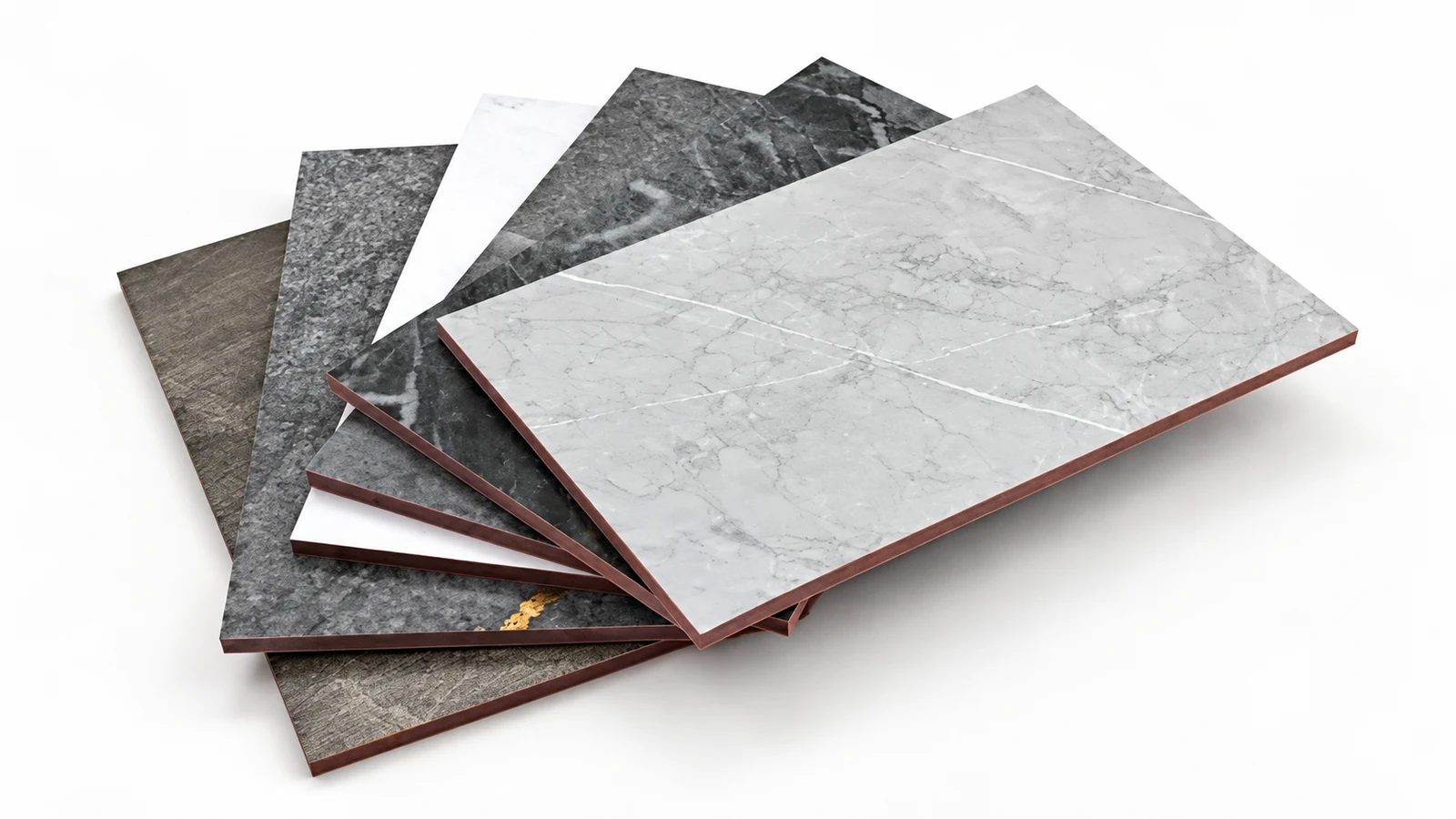
What Is a WPC Wall Panel, and Which Specifications Define It?

A WPC wall panel is an interior decorative product within the wood-plastic composite material family, but the name does not identify one fixed profile. Commercial panels can differ in cross-section, overall width, effective coverage, profile depth, joint design, visible finish and installation method. For a B2B buyer, the first task is not to decide which panel looks best. It is to establish exactly which product the supplier is quoting, how adjacent pieces connect, which fittings belong to the system and which documents define the offered configuration.
A WPC Wall Panel Is a Product Family, Not One Fixed Profile
In commercial building-material use, WPC commonly refers to a polymer-based composite containing wood-derived material. The exact formulation, core construction, surface layer and manufacturing method can vary between products. The abbreviation therefore identifies a broad material direction rather than a universal panel specification.
That distinction matters in procurement. Two products may both be described as WPC wall panels while using different profile shapes, edge connections, visible surfaces or installation routes. A material name cannot tell a quantity surveyor how much wall one piece covers, cannot show an installer where fixing or bonding occurs and cannot confirm whether a particular trim fits the panel edge.
Dongfanglong organizes related interior products under Wall Decorative Panels, wood-plastic composite grating panels, ceiling and partition profiles, and wall installation fittings. This category structure helps buyers navigate the product family, but the purchase description still needs to identify a specific commercial product and its supporting documents.
Identify the Commercial Product Before Comparing Specifications
The phrase “WPC wall panel” can be used for several different commercial forms. An integrated or broad-face panel presents a relatively continuous decorative surface. A fluted or grating panel uses repeated ribs, waves or grooves. Narrow hollow profiles may be installed individually to create a grille effect, while ceiling or partition profiles belong to a different assembly even when they use a related material.
These names describe different products rather than minor style variations. A broad panel, a fluted profile and a ceiling tube may use different quantity units, joint details, edge treatments and accessory packages. A quotation that states only “WPC panel” can therefore be technically incomplete even when the supplier has selected a real catalog item.
A useful product identity normally includes the product name or code, product family, cross-section, overall dimensions, installed coverage, surface reference, joint form, intended orientation and installation method. When one of these fields is not controlled, the quotation should say so instead of allowing a general category name to fill the gap.
The Terms That Define a WPC Wall Panel
| Specification Term | What It Means | Risk if It Is Unclear | Evidence to Request |
|---|---|---|---|
| Overall width | The full physical width of one panel, including connection edges where present. | Piece count may be calculated from a dimension that does not equal installed wall coverage. | A dimensioned product cross-section. |
| Effective coverage | The wall width covered after adjacent panels are joined or overlapped as intended. | Quantities, joint positions and the final cut width can be wrong. | Installed coverage value linked to the joint detail. |
| Profile depth | The maximum projection of the panel from its rear face or supporting substrate. | The assembly may conflict with trims, openings, furniture, switches or adjacent finishes. | A cross-section showing front projection and wall-facing geometry. |
| Joint type | The way two adjacent pieces connect, overlap, interlock or meet. | Visible gaps, alignment problems or incompatible site installation may result. | A joint drawing, installation detail or joined physical sample. |
| Visible face | The surface and orientation intended to remain exposed after installation. | Cutting, labeling or installation direction may be reversed. | A marked drawing or labeled product sample. |
| Finish reference | The controlled color, grain, texture and gloss basis used for approval. | Screen images may be mistaken for a production acceptance standard. | A labeled physical sample or another agreed controlled reference. |
| Installation method | The intended fixing, bonding, support or interlocking route for the offered product. | The panel, substrate and accessory package may not form a workable assembly. | Product-specific installation information and interface details. |
These fields are connected. The joint geometry reduces or defines effective coverage; effective coverage changes the required number of pieces; the number and location of joints affect cutting and termination; profile depth then determines how those terminations meet corners and nearby materials. A missing cross-section can therefore create both a quantity error and an installation-interface error.
Dimensions also need a clear unit and reference point. “Panel width,” for example, is ambiguous unless the document states whether it means physical width or installed coverage. “Thickness” may be unclear on a ribbed or hollow profile because the maximum projection, wall-facing section and local material thickness are different concepts. The drawing should use the dimension that controls the purchasing decision rather than a familiar but undefined label.
Why the Cross-Section Drawing Matters More Than the Product Name
A product name helps a buyer find the right page, but a cross-section allows the project team to verify what will actually arrive. The drawing should identify the full width, effective coverage, maximum profile depth, connection edges, wall-facing geometry, visible face and any location intended for fixing or bonding. It should also show where a compatible trim meets the panel when that interface forms part of the offered system.
The WPC Integrated Wood-Plastic Composite Wall Panels page is a relevant product reference within Dongfanglong’s wall decorative range. The page can support product discovery, but the order still needs a controlled cross-section and finish reference for the exact item being quoted. A catalog photograph cannot establish installed coverage, edge geometry or project-specific cutting responsibility.
Cross-sections should remain traceable through quotation and approval. When a supplier revises a joint, profile or dimension after the first offer, the new drawing needs a revision identifier and a declared explanation. Otherwise, purchasing may approve one price while the installer later receives a different interface.
Panel, Joint and Fitting Form One Defined System
A wall-panel order often involves more than the visible boards. Start and end conditions, internal and external corners, transitions to skirting or ceilings, and edges around openings may require coordinated fittings or a project-specific termination. The selected detail affects the visible width of the last panel and may change where installation begins.
Dongfanglong’s Wall Installation Fittings category provides a navigation point for skirting, moulding, corner and related profile products. It does not prove that every fitting is compatible with every wall panel. Compatibility must be confirmed through the panel edge, fitting section, finish and installation detail.
A complete product definition therefore records the panel and the required boundary pieces together. “Matching accessories” is too broad for purchasing because it does not identify item names, quantities, finish, unit basis or included scope. The supplier return should state which fittings are proposed, which are optional and which project edges remain outside the offer.
A Finish Name Is Not a Complete Approval Reference
Color names and website photographs are useful during early product discovery, but they are weak production controls. Screen settings, lighting and image processing can change how a surface appears. A quotation should identify the offered finish code or reference, while formal approval should use a labeled physical sample or another agreed controlled basis where the project requires visual consistency.
The approval record needs enough identity to prevent later confusion: product name, finish reference, sample date or revision, orientation where relevant and the person or project role authorized to approve it. The supplier should also state whether the sample represents the offered production surface or only an indicative catalog option.
This section defines the reference rather than selecting the best finish for a room. Final visual suitability can depend on lighting, adjacent materials and a multi-panel mock-up; those are project-selection questions that should be reviewed separately from basic product identification.
What WPC Does Not Prove by Itself
The material label “WPC” does not automatically prove that every product is waterproof, fire-rated, acoustic, impact-resistant, suitable for outdoor exposure or compliant with a particular project requirement. Those conclusions depend on the exact profile, surface construction, installation condition, test method and acceptance criterion.
Performance evidence should be matched to the offered product. Inside a report or certificate, check the product identity, specimen construction, dimensions or profile where stated, test method, result, classification, date and scope. Evidence for another profile, thickness or application should not be treated automatically as proof for the quoted wall panel.
The same boundary applies to installation claims. A product may be described as interlocking or straightforward to install, yet the project still needs a suitable substrate, correct starting line, compatible trims and an installer who follows the supplied method. Product identity and project performance are related, but they are not the same approval decision.
What Should a Product Data Package Contain?
A useful data package allows purchasing, design and installation teams to refer to the same product. It normally identifies:
- Product name, code and product family.
- Dimensioned cross-section.
- Overall width and effective installed coverage.
- Profile depth or other project-controlling dimensions.
- Joint and visible-face description.
- Finish reference and sample relationship.
- Intended installation method.
- Compatible fittings included or proposed.
- Packing unit and product identification on the package.
- Available product-specific performance evidence.
- Declared differences from the buyer’s request.
Document quantity is less important than document relevance. A generic brochure may show a large product range but still leave the offered section unconfirmed. A short model-specific drawing and a labeled sample may close more purchasing risk because they identify the actual interface and visual basis.
Prepare a Product-Identification RFQ
Information to Provide
A product-identification RFQ should state the intended wall or ceiling use, required product form, overall project dimensions, reference image or drawing, preferred finish, panel orientation, joint and edge requirements, required fittings, quantity basis and documentation needs. The purpose is not yet to declare one profile the best. It is to give the supplier enough information to identify the exact item being offered.
Information the Supplier Should Return
The response needs the product name or code, category, dimensioned cross-section, overall and effective width, profile depth, joint form, visible face, finish reference, proposed installation method, compatible fittings, packing basis, available evidence, deviations and any missing buyer inputs. If a field is not controlled, the quotation should state that limitation clearly.
After reviewing the wall-panel category and the integrated WPC product reference, submit the required product form, cross-section, coverage width, finish, joint and fitting information through the Contact Us page. The next commercial step is to confirm the identity and scope of the quoted product before project selection or price comparison continues.
Frequently Asked Questions
Is a WPC wall panel the same as a WPC fluted wall panel?
Not necessarily. WPC wall panel is a broad category term. A fluted wall panel is a specific profile route with repeated ribs, waves or grooves. The cross-section, coverage, joint and installation documents determine whether two products are actually comparable.
Does WPC automatically mean waterproof or fire-rated?
No. The WPC material description alone does not prove a performance classification. Review evidence for the exact product, specimen construction, installation condition and project requirement before using a performance claim in approval or procurement.